

The 5 Elements in Vastu Shastra Vedic architecture is deeply connected to nature and cosmic balance. One of the most important concepts in ancient Indian design science is the understanding of the five natural elements that influence energy within a home or workplace. These elements create harmony between humans and their surroundings, helping improve peace, prosperity, and well-being.
In traditional vastu principles, every direction, room, and structure is linked with a specific natural force. When these forces are balanced properly, a space feels more comfortable, energetic, and positive. Understanding the 5 elements can help homeowners create a healthier and more balanced environment
Importance of the 5 Elements in Vastu
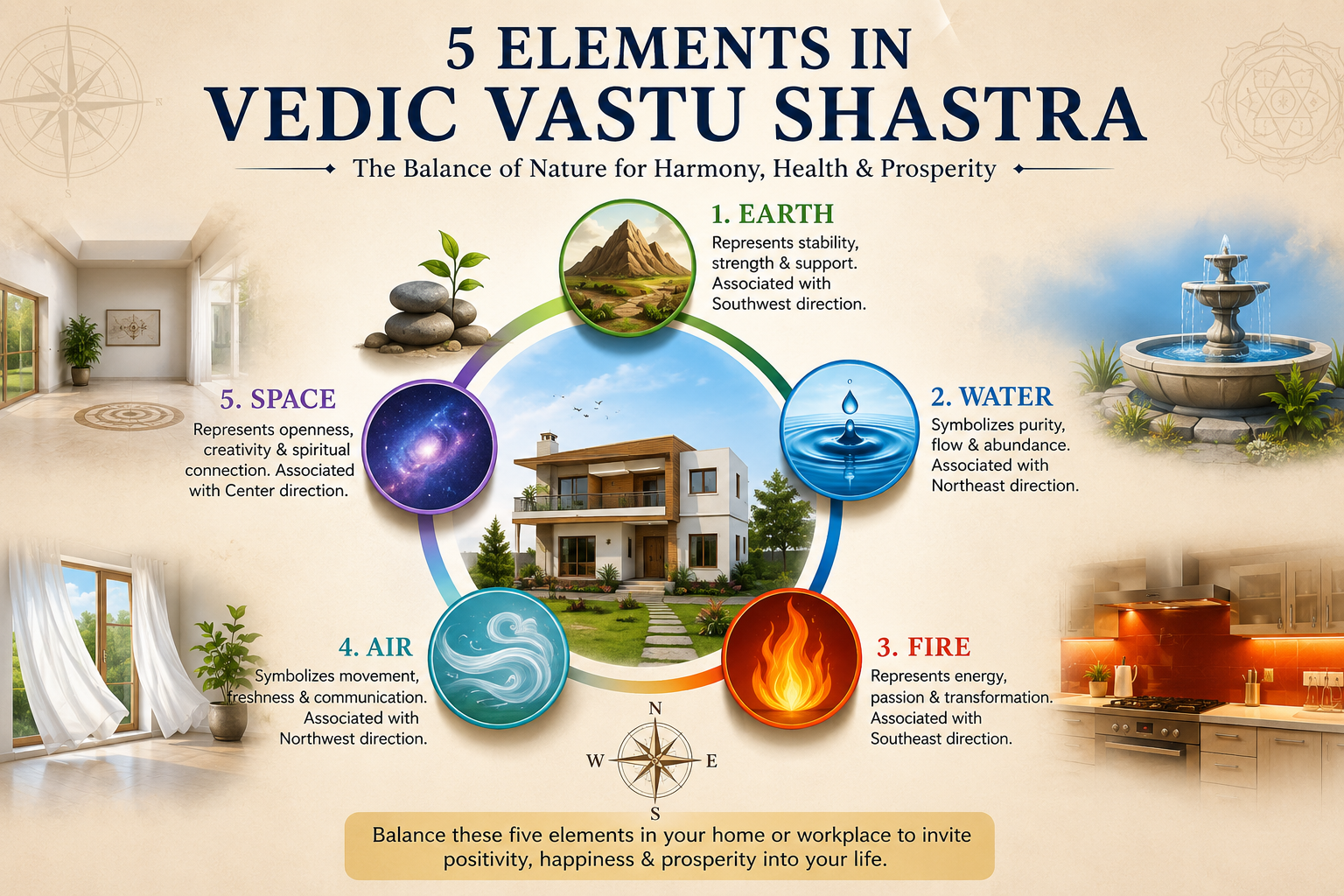
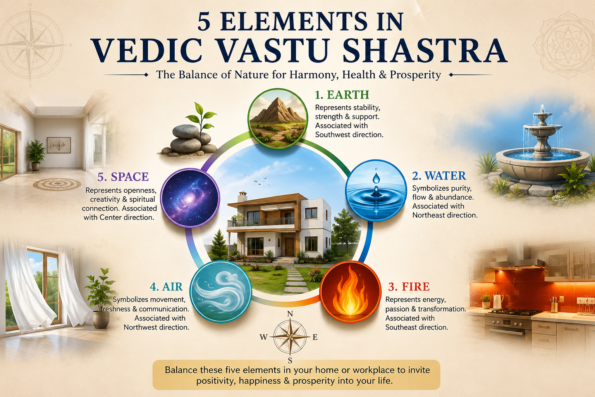
The ancient science of vastu is based on the belief that the universe is made up of 5 core elements: Earth, Water, Fire, Air, and Space. These elements are known as the “Pancha Mahabhutas” in Sanskrit. Each one plays a unique role in shaping the flow of energy inside a building.
Proper placement of rooms, furniture, and décor according to these natural forces is believed to improve harmony in daily life. Whether designing a new home or renovating an old one, these principles continue to guide many modern households.
1. Earth Element
The Earth element represents stability, strength, and support. It is connected with grounding energy and provides balance in life. In Vedic design principles, the southwest direction is associated with Earth.
Homes that maintain a strong Earth element often feel secure and peaceful. Heavy furniture, natural stones, and earthy colors such as brown, beige, or mustard can strengthen this energy. Bedrooms and storage spaces are commonly recommended in the southwest area to enhance stability.
The shape and slope of land are also important. A square or rectangular plot is generally considered ideal because it symbolizes balance and consistency.
2. Water Element
Water symbolizes purity, flow, and abundance. This element is linked to the northeast direction and is considered highly auspicious in Indian architectural traditions.
To maintain positive energy, water sources like fountains, water tanks, or small ponds are often placed in the northeast area. Clean and flowing water is believed to attract prosperity and mental clarity.
Blue shades, mirrors, and glass decorations can also help strengthen this element indoors. However, improper placement of water bodies may disturb the energetic balance of a home. That is why careful planning is encouraged in traditional vastu practices.
3. Fire Element
Fire represents energy, passion, confidence, and transformation. It is associated with the southeast direction and plays an important role in health and vitality.
The kitchen is ideally located in the southeast because cooking activities naturally involve heat and fire. According to ancient architectural beliefs, this placement supports positive energy and good health for family members.
Warm colors like red, orange, and pink can enhance the Fire element. Lighting, candles, and electrical equipment also symbolize this force. At the same time, excessive fire energy may create stress or aggression, so maintaining balance is essential.
Many homeowners apply these principles while designing kitchens, dining areas, and workspaces to create a more energetic atmosphere.
4. Air Element
The Air element is linked with movement, freshness, communication, and social relationships. It is connected to the northwest direction.
Proper ventilation and airflow are extremely important in maintaining this element. Large windows, balconies, and open spaces allow fresh air to circulate freely throughout the home.
Light fabrics, indoor plants, and soft neutral shades can improve the Air element indoors. Living rooms and guest rooms are often recommended in the northwest area because this direction encourages interaction and communication.
In modern homes, cross ventilation and natural airflow are considered practical ways to maintain balance according to vastu principles.
5. Space Element
Space, also known as Ether or Akash, represents openness, creativity, and spiritual connection. It is considered the most subtle among the five elements and influences the overall energy of a building.
The center of a house is often associated with the Space element. Keeping this area open and clutter-free is believed to allow positive energy to flow smoothly throughout the property.
Natural light, high ceilings, and minimal obstruction help strengthen this force. Meditation rooms or quiet corners can also support a calm and peaceful atmosphere.
A balanced Space element creates emotional clarity and encourages mental relaxation, making the environment feel more comfortable and welcoming.
How to Balance the Five Elements
Balancing these five natural forces does not always require major structural changes. Simple adjustments can also improve harmony within a living space. Here are a few practical suggestions:
- Keep rooms clean and organized
- Allow natural sunlight and airflow indoors
- Use natural materials like wood, clay, and stone
- Avoid clutter in the center of the house
- Place water features thoughtfully
- Use colors that match the energy of each direction
These small changes can create a more peaceful and balanced environment while respecting traditional architectural wisdom.
Modern Relevance of Vastu Principles
Today, many architects and interior designers combine modern layouts with traditional vastu concepts. Although lifestyles have changed over time, the idea of living in harmony with nature remains relevant.
People often seek homes that provide comfort, positivity, and emotional well-being. The five elements offer a simple framework for creating balanced surroundings that support both physical and mental health.
Whether someone fully follows traditional guidelines or simply adopts a few ideas, understanding these natural forces can inspire mindful living and thoughtful design.